Original: $1,990.00
-70%$1,990.00
$597.00The Story
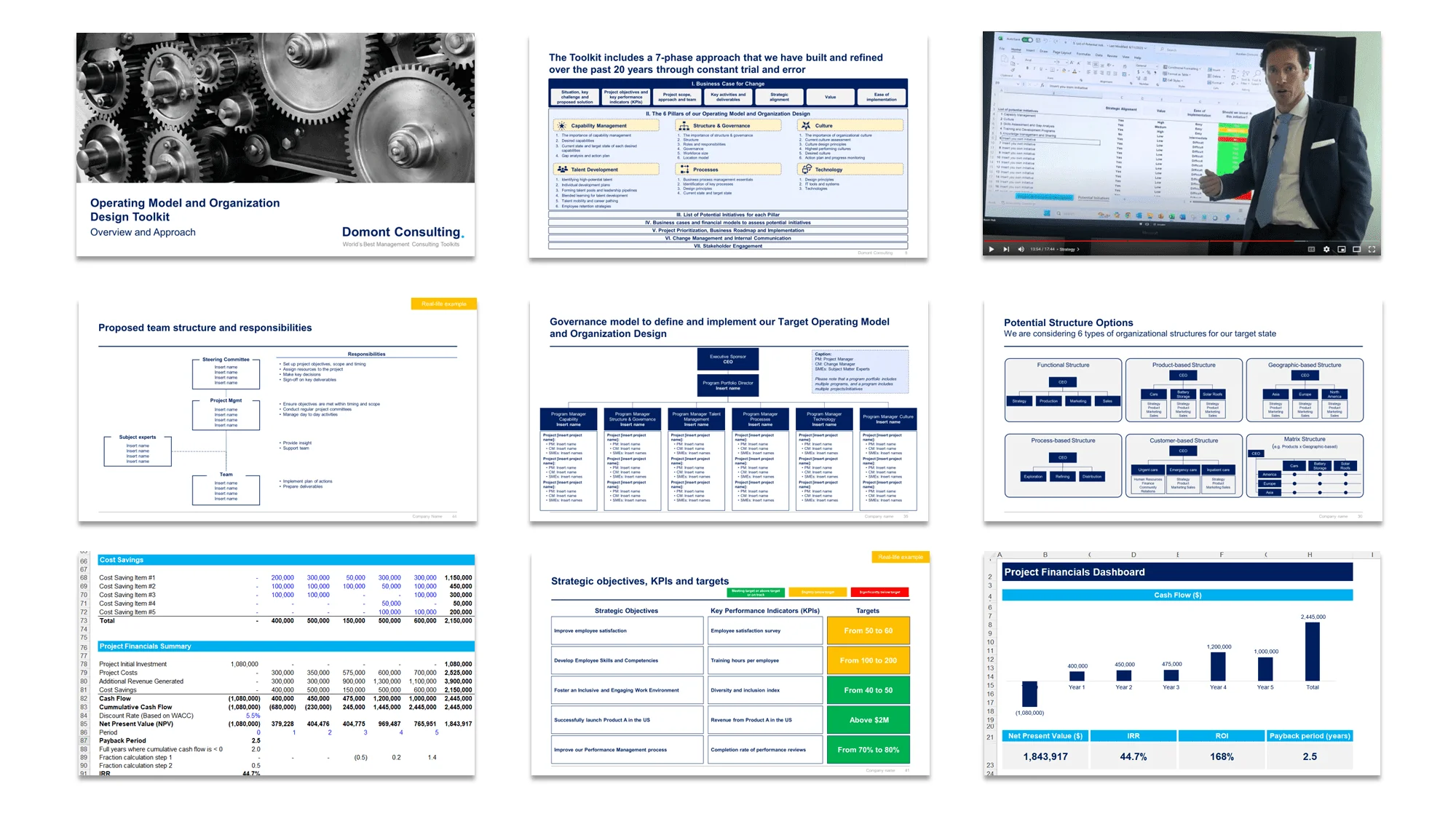
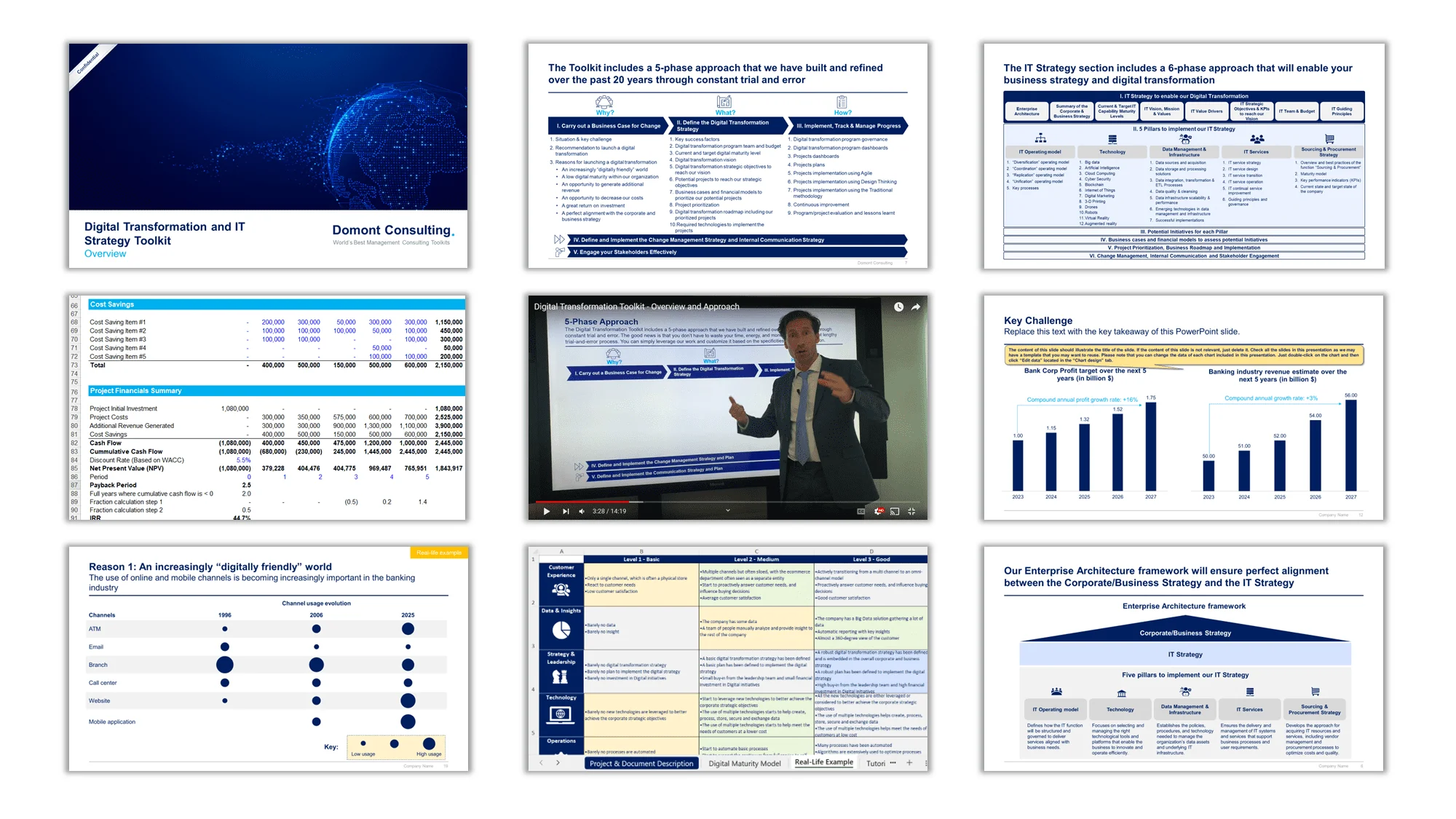
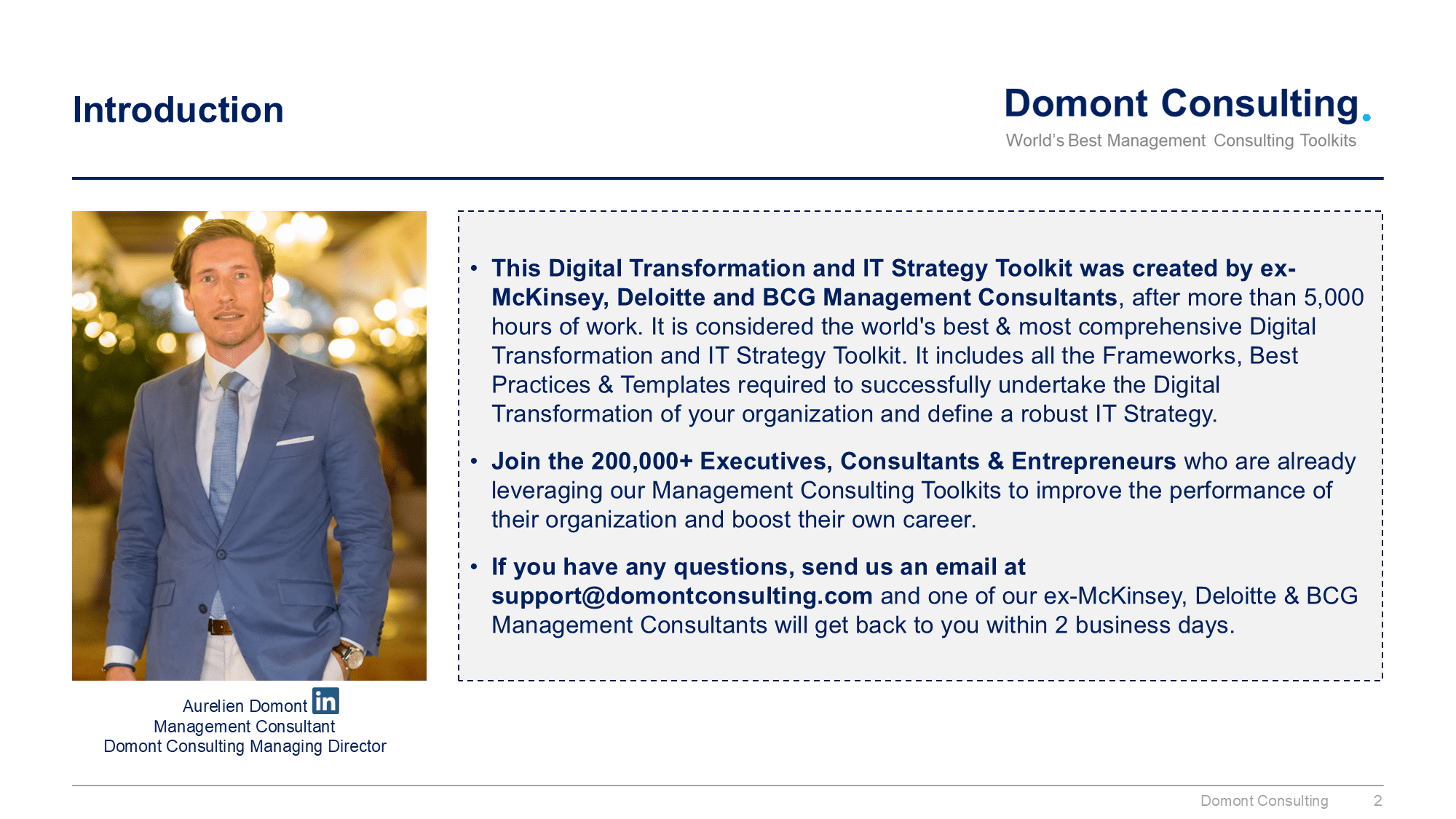
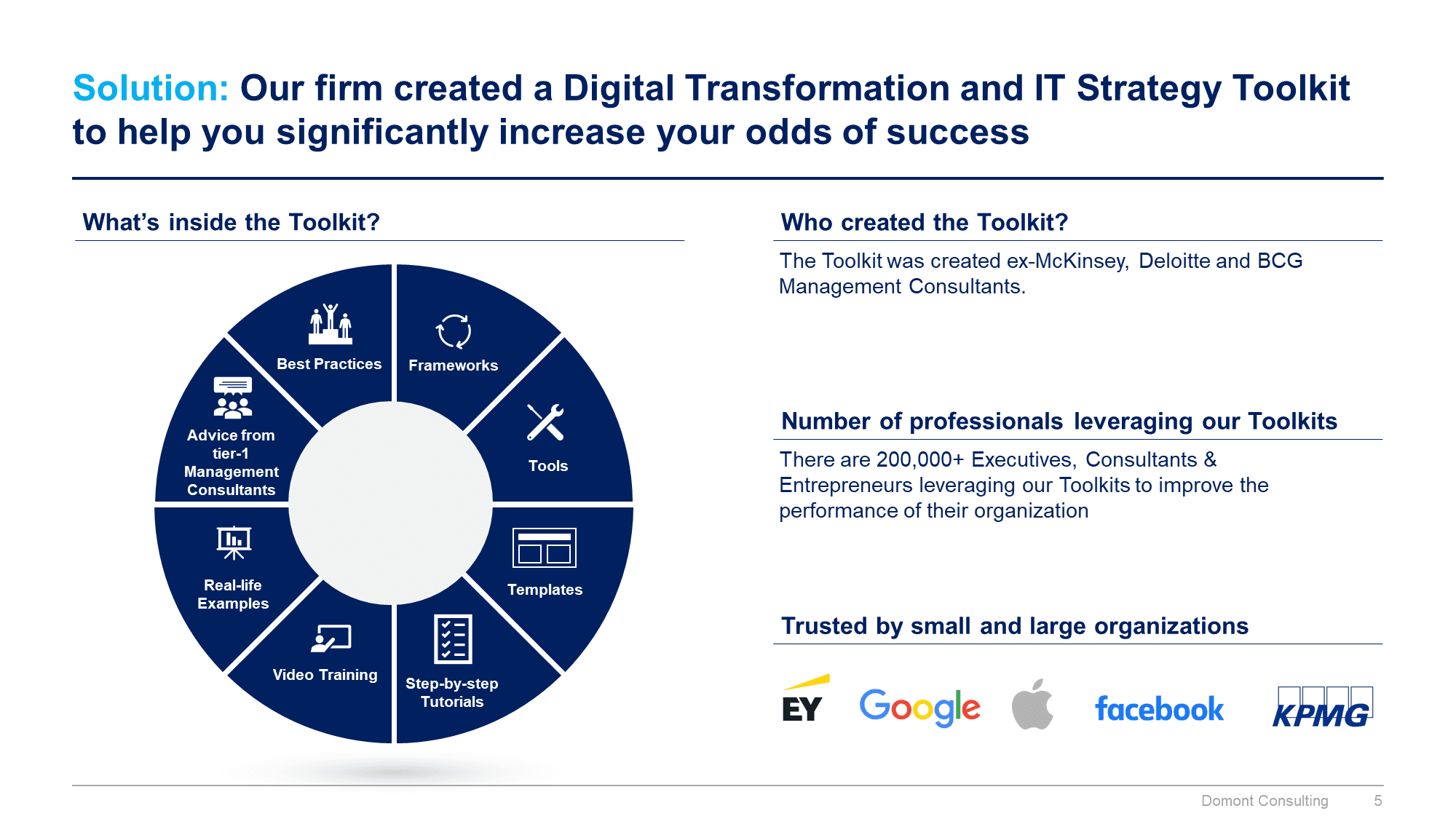
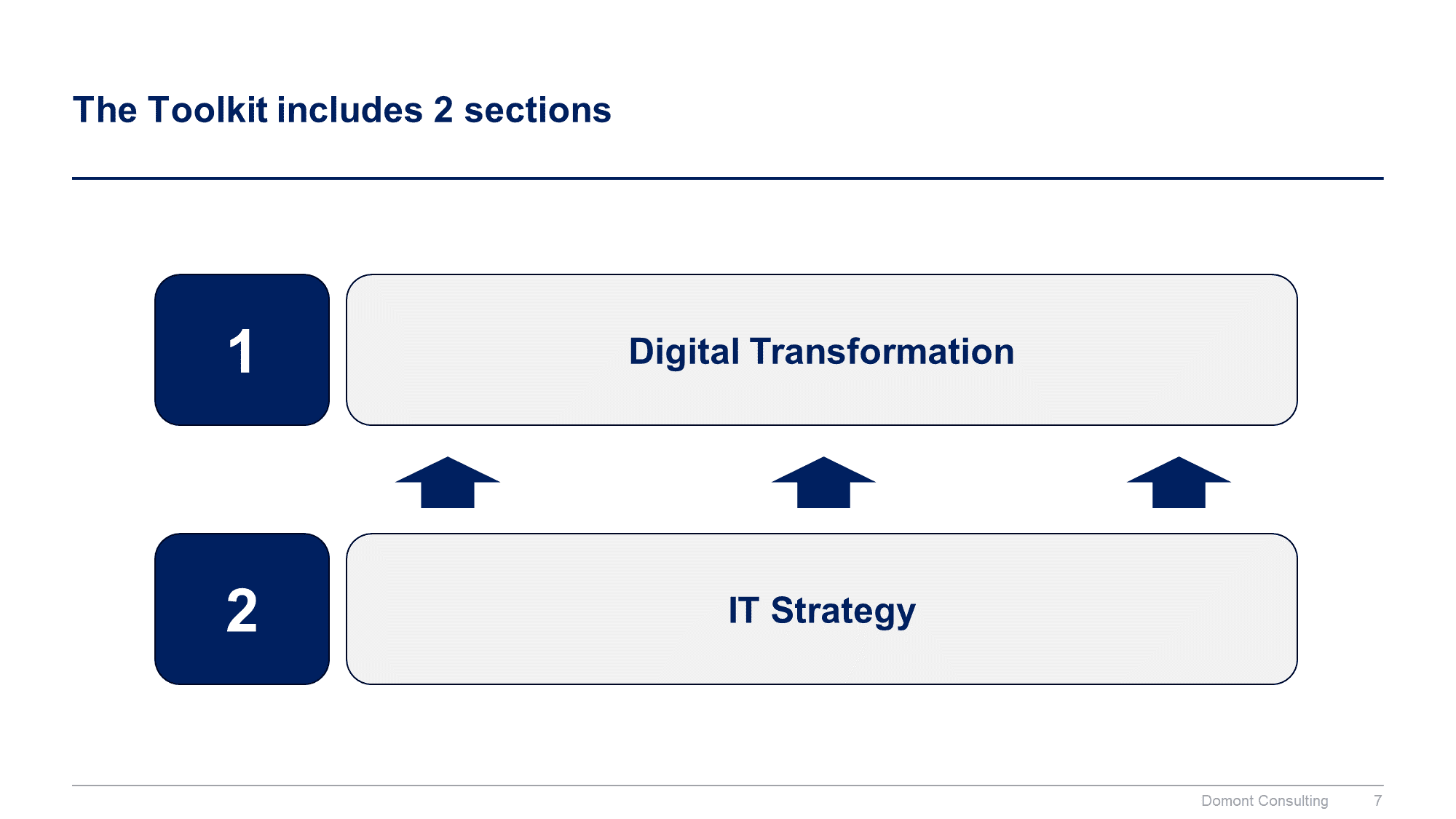
This Digital Transformation and IT Strategy Toolkit was created by ex-McKinsey, Deloitte and BCG Management Consultants, after more than 5,000 hours of work. It is considered the world's best & most comprehensive Digital Transformation and IT Strategy Toolkit. It includes all the Frameworks, Best Practices & Templates required to successfully undertake the Digital Transformation of your organization and define a robust IT Strategy.
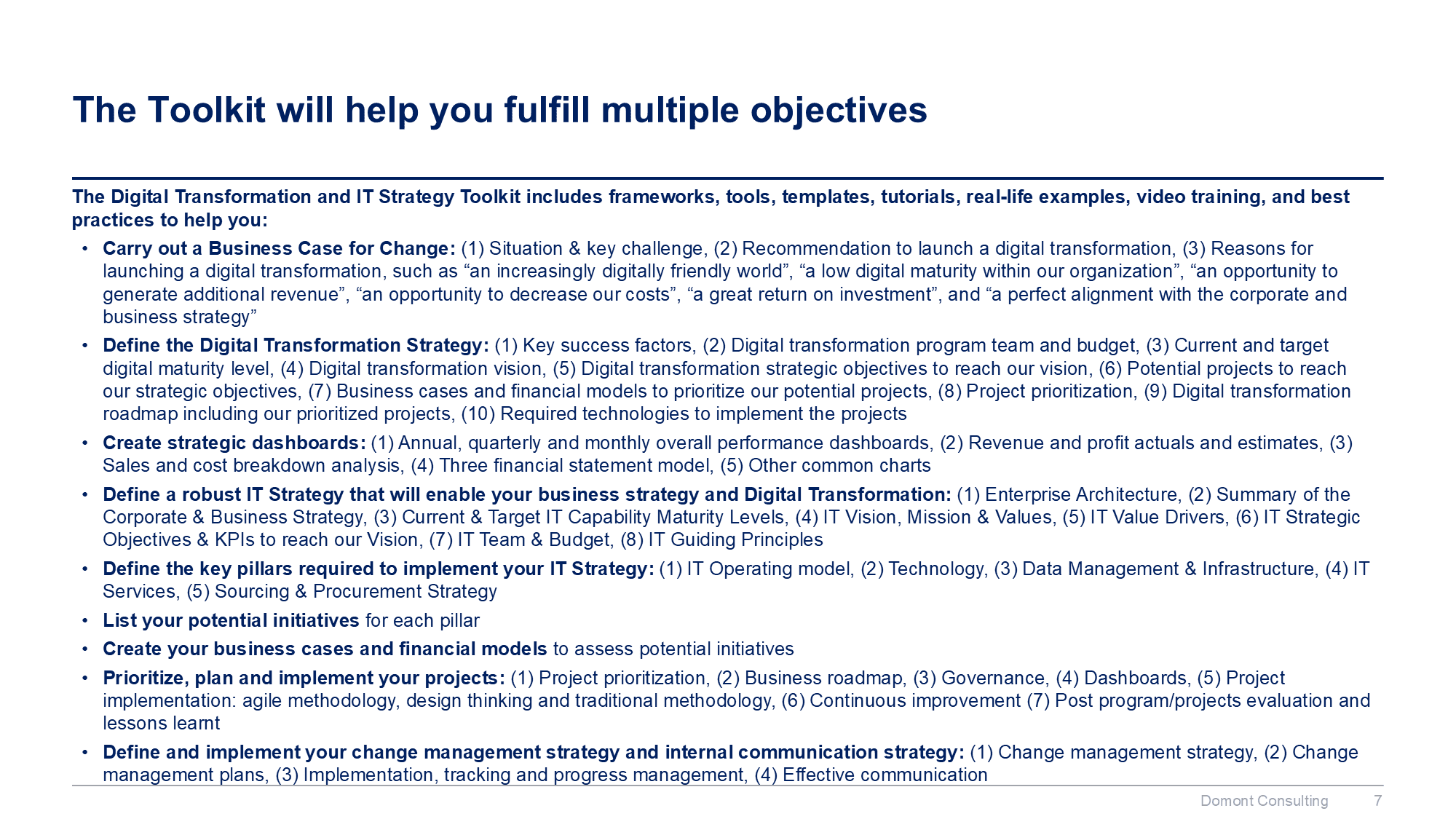
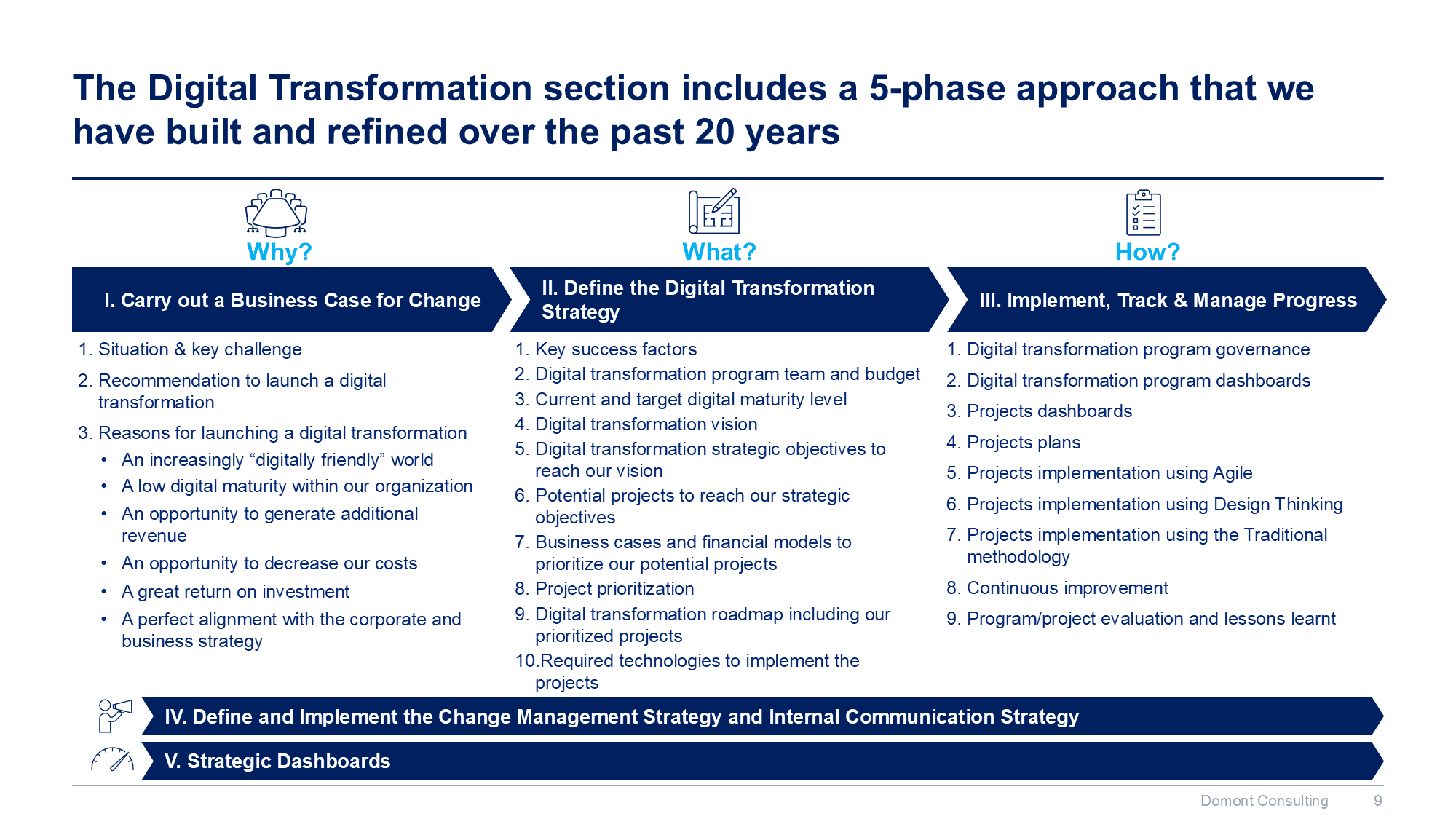
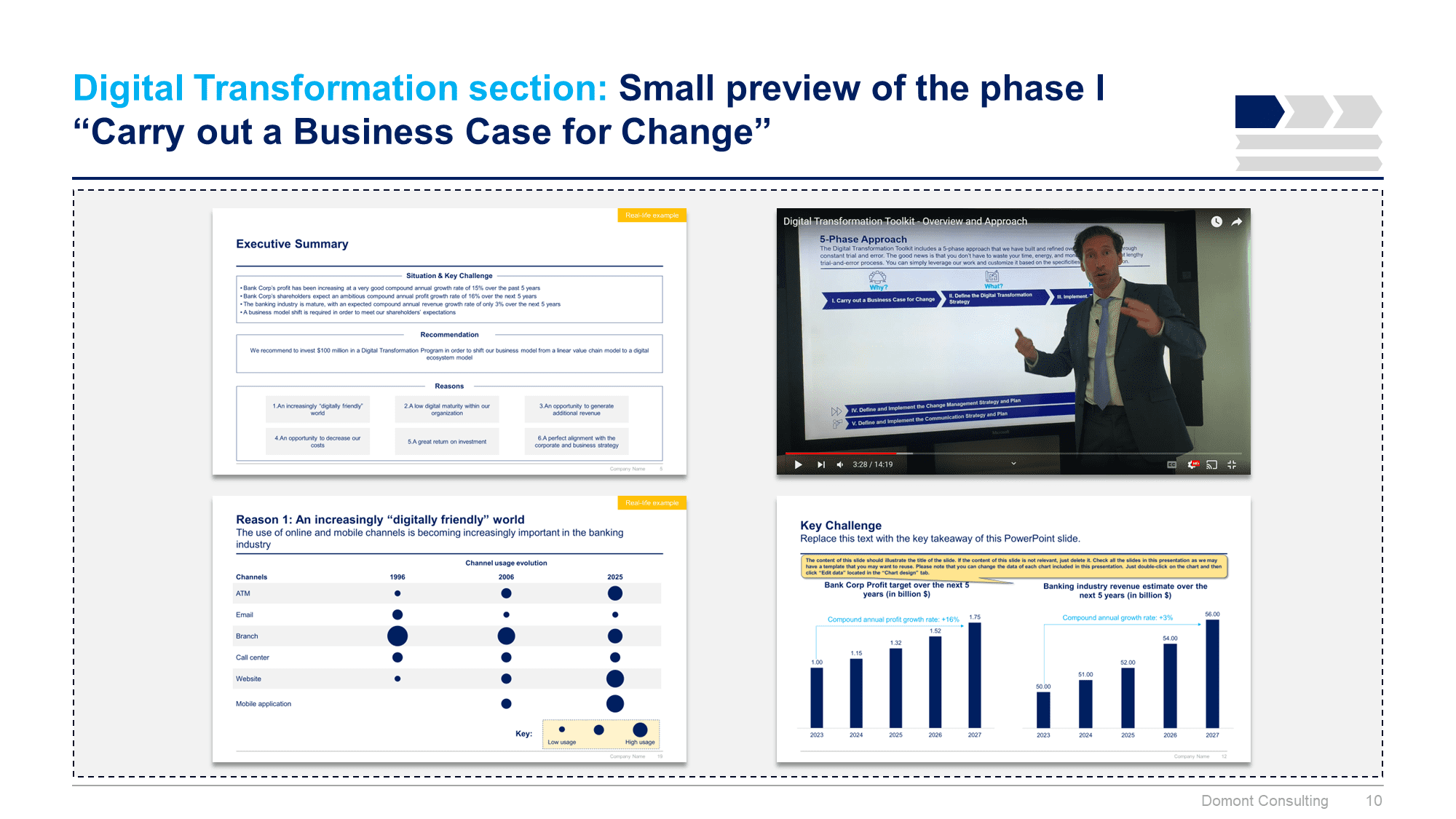
- Carry out a Business Case for Change: (1) Situation & key challenge, (2) Recommendation to launch a digital transformation, (3) Reasons for launching a digital transformation, such as “an increasingly digitally friendly world”, “a low digital maturity within our organization”, “an opportunity to generate additional revenue”, “an opportunity to decrease our costs”, “a great return on investment”, and “a perfect alignment with the corporate and business strategy”
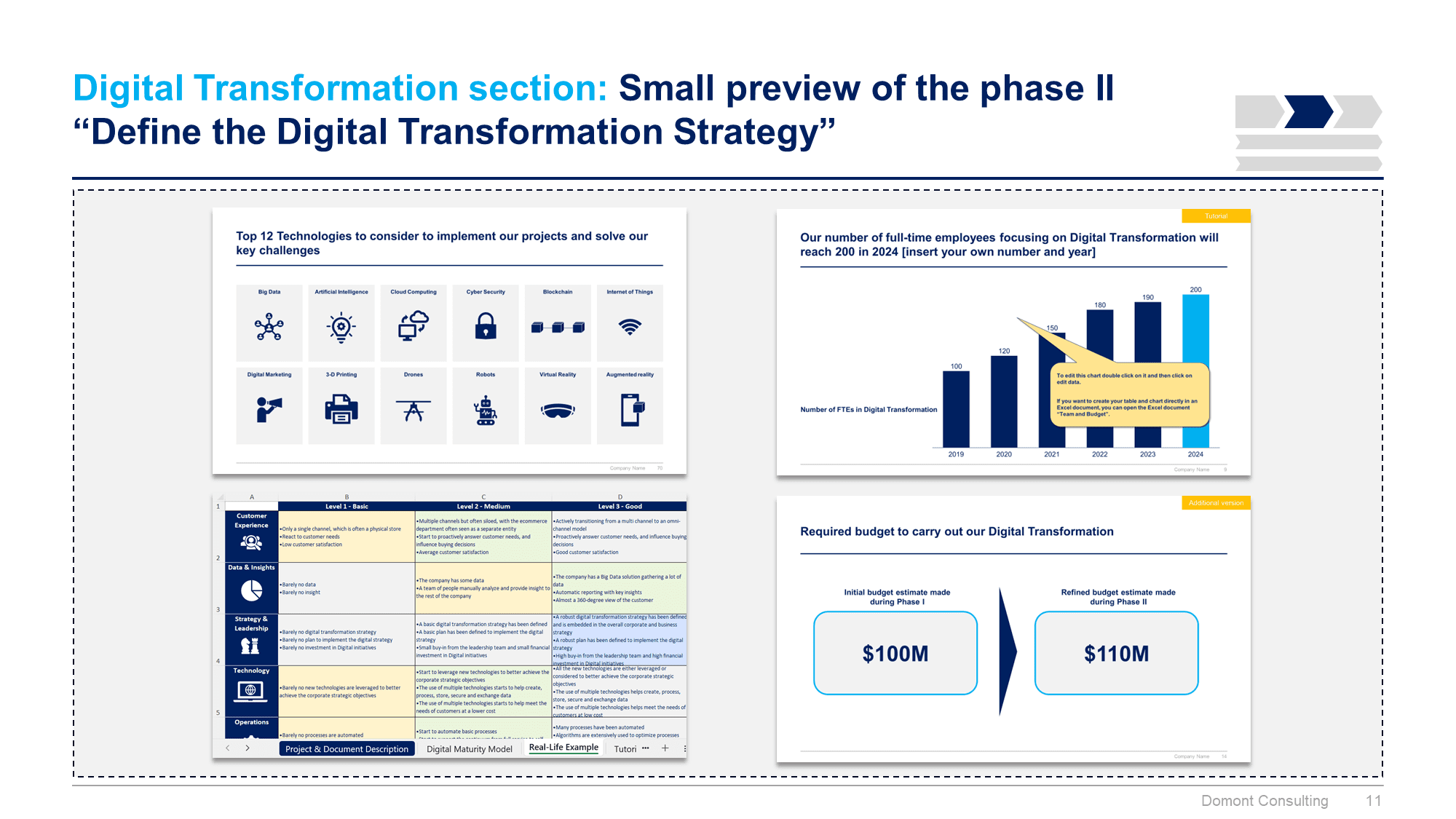
- Define the Digital Transformation Strategy: (1) Key success factors, (2) Digital transformation program team and budget, (3) Current and target digital maturity level, (4) Digital transformation vision, (5) Digital transformation strategic objectives to reach our vision, (6) Potential projects to reach our strategic objectives, (7) Business cases and financial models to prioritize our potential projects, (8) Project prioritization, (9) Digital transformation roadmap including our prioritized projects, (10) Required technologies to implement the projects
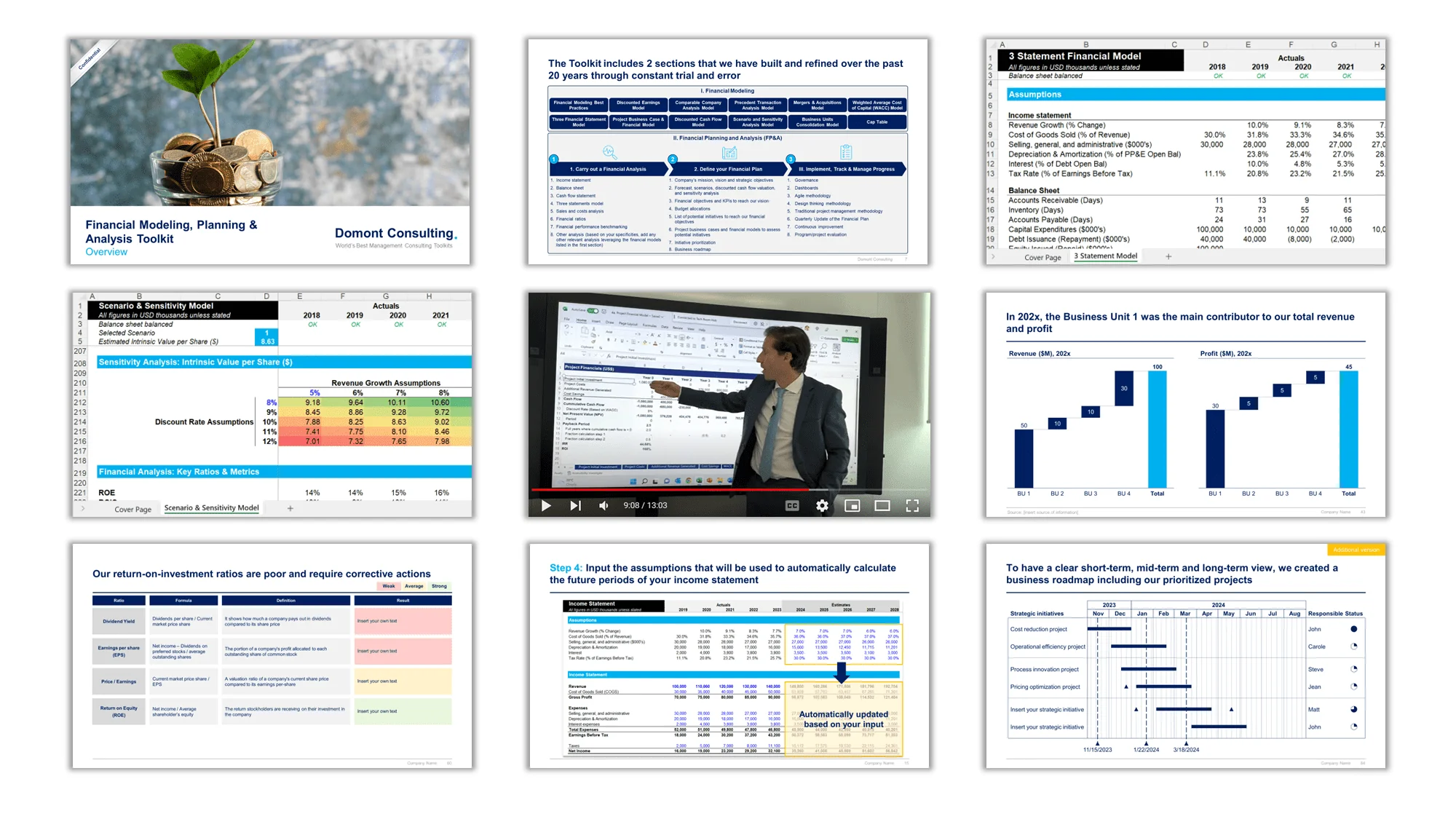
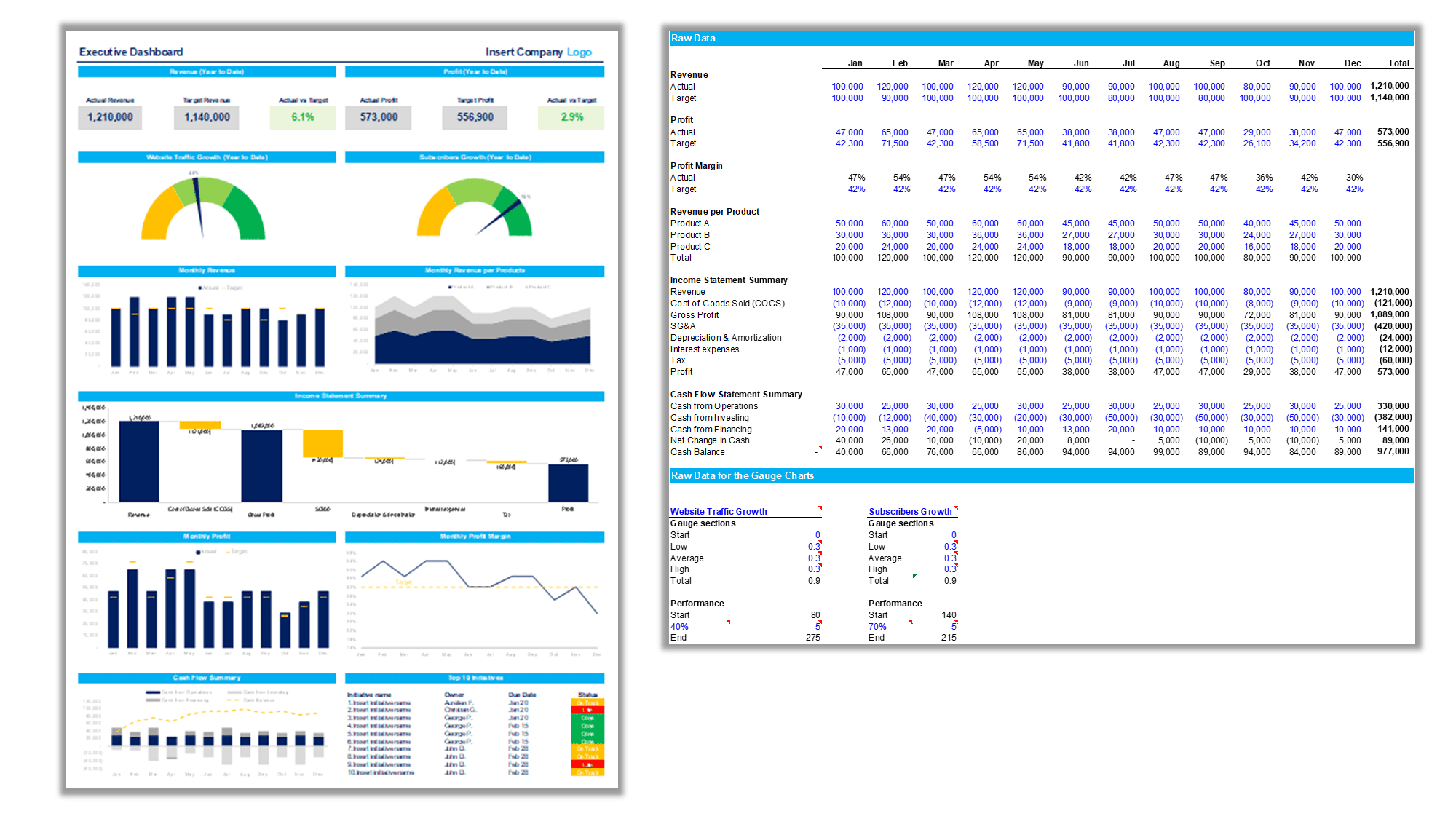
- Create strategic dashboards: (1) Annual, quarterly and monthly overall performance dashboards, (2) Revenue and profit actuals and estimates, (3) Sales and cost breakdown analysis, (4) Three financial statement model, (5) Other common charts
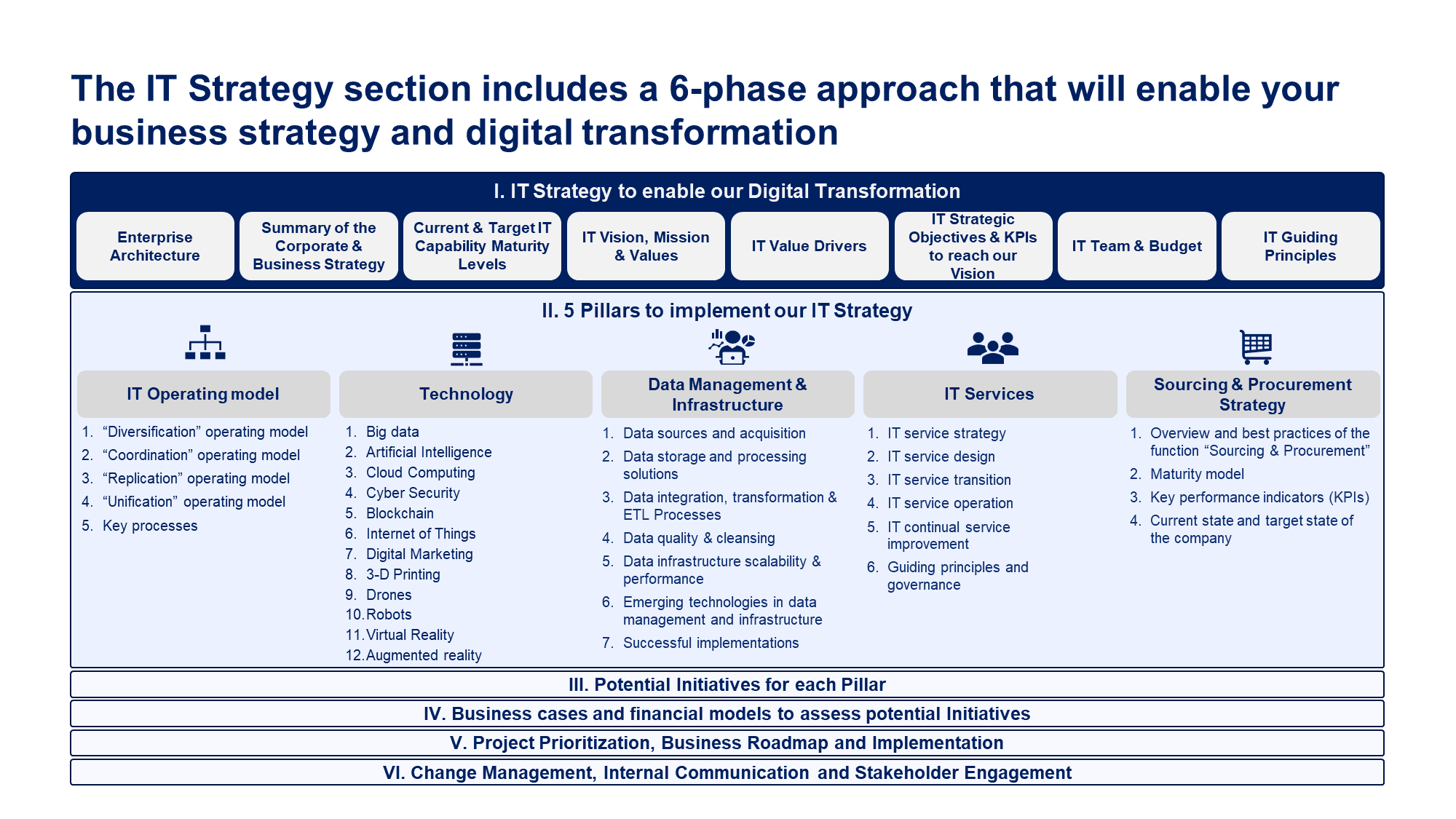
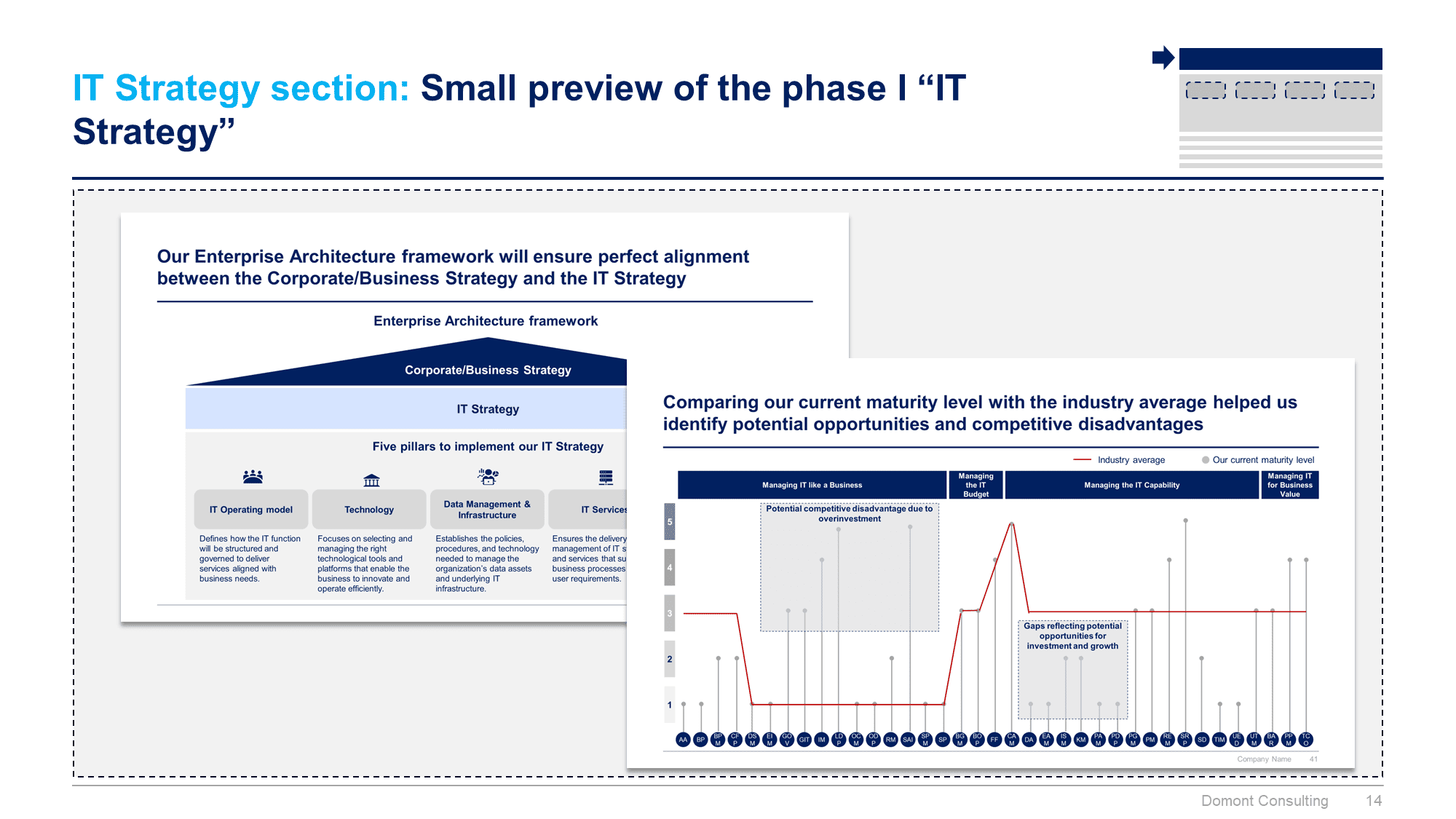
- Define a robust IT Strategy that will enable your business strategy and Digital Transformation: (1) Enterprise Architecture, (2) Summary of the Corporate & Business Strategy, (3) Current & Target IT Capability Maturity Levels, (4) IT Vision, Mission & Values, (5) IT Value Drivers, (6) IT Strategic Objectives & KPIs to reach our Vision, (7) IT Team & Budget, (8) IT Guiding Principles
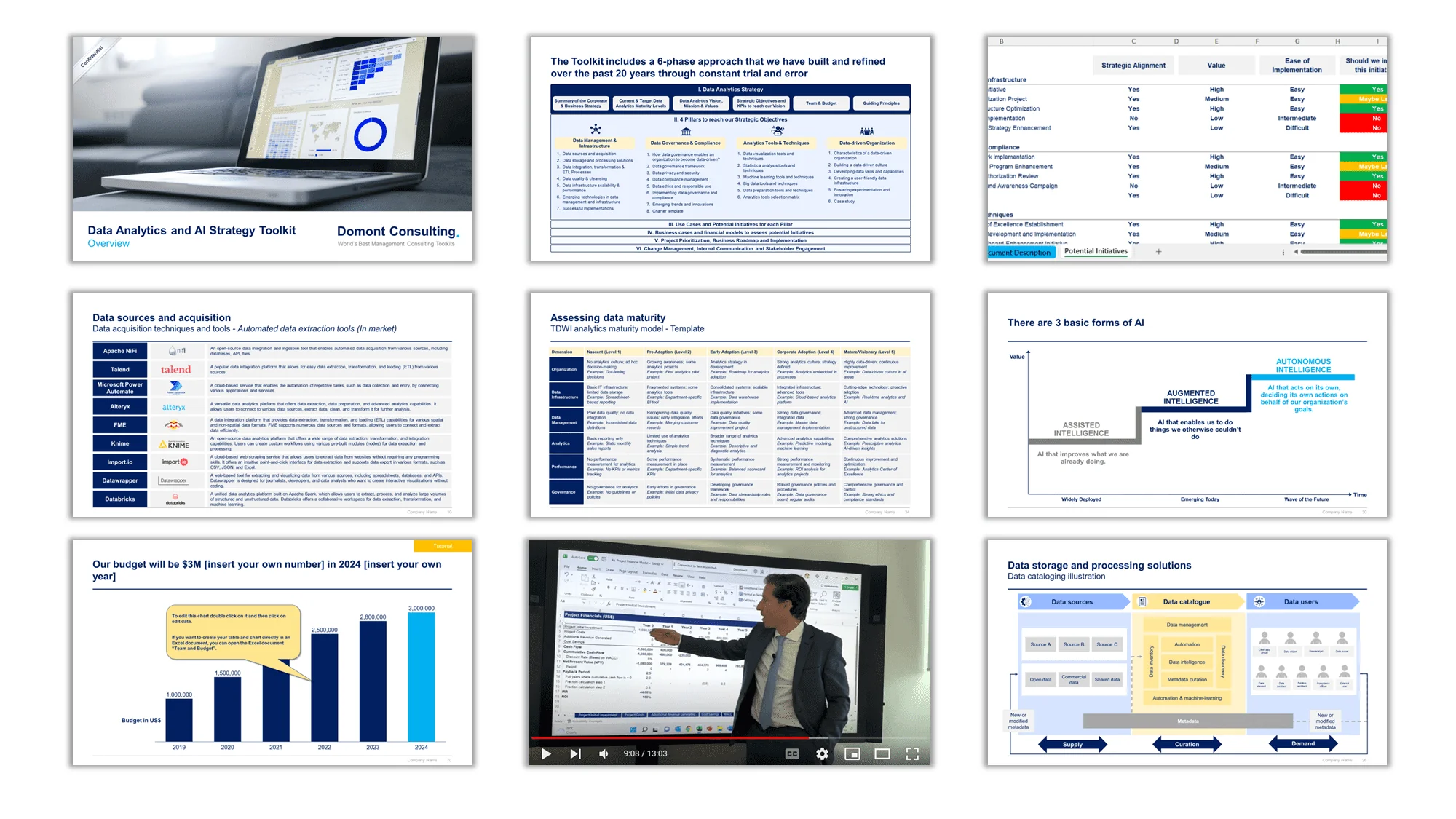
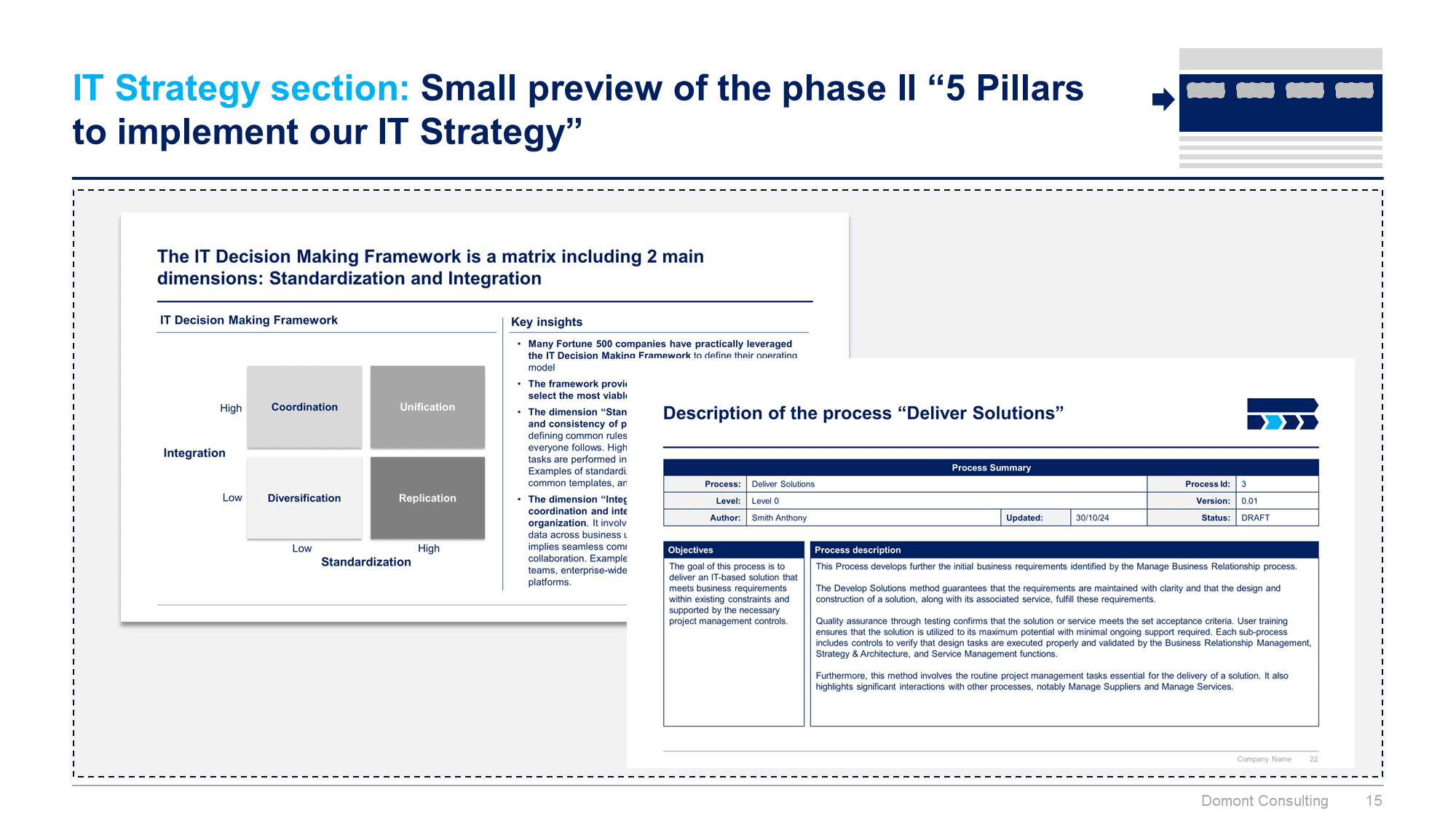
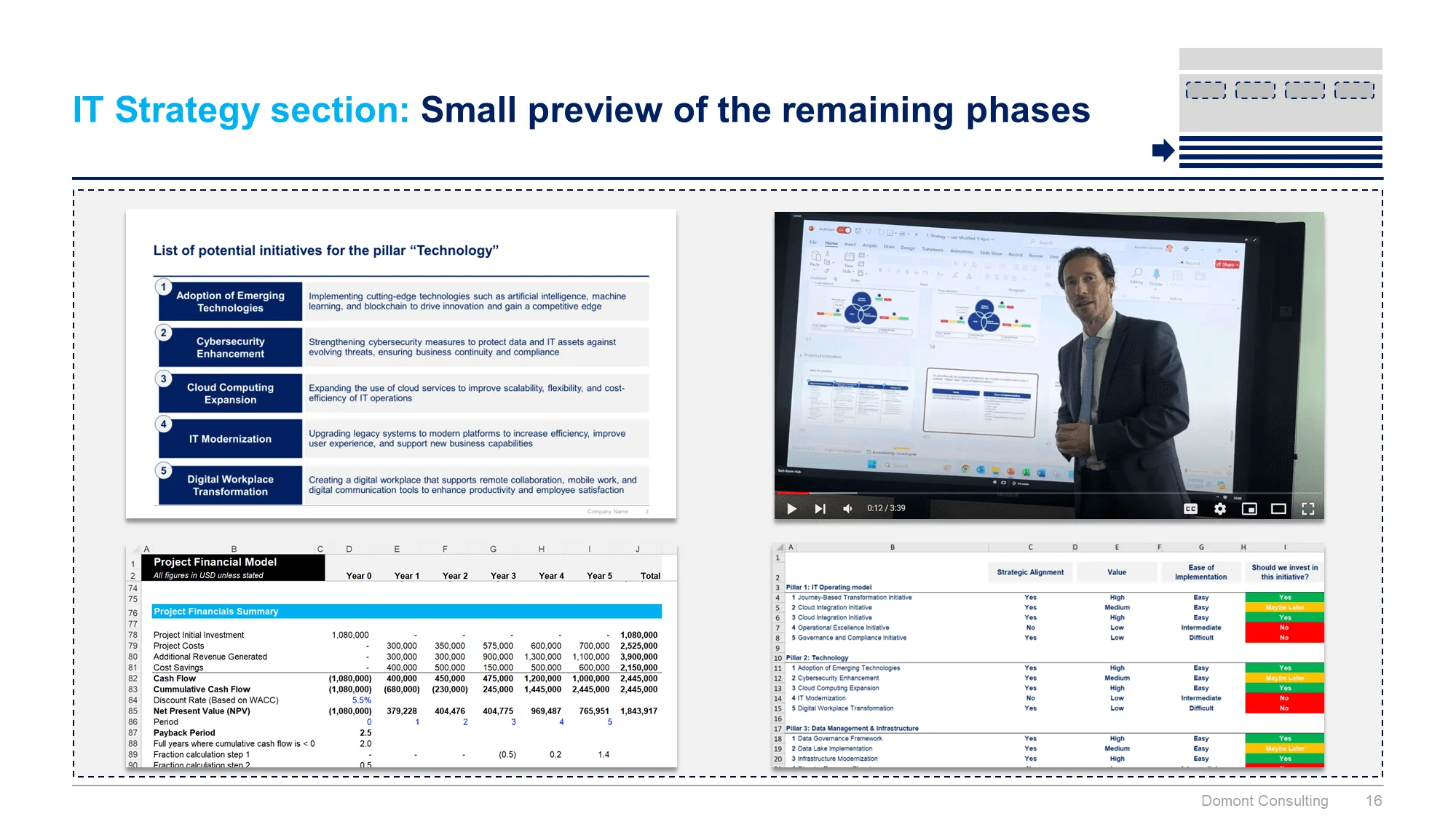
- Define the key pillars required to implement your IT Strategy: (1) IT Operating model, (2) Technology, (3) Data Management & Infrastructure, (4) IT Services, (5) Sourcing & Procurement Strategy
- List your potential initiatives for each pillar
- Create your business cases and financial models to assess potential initiatives
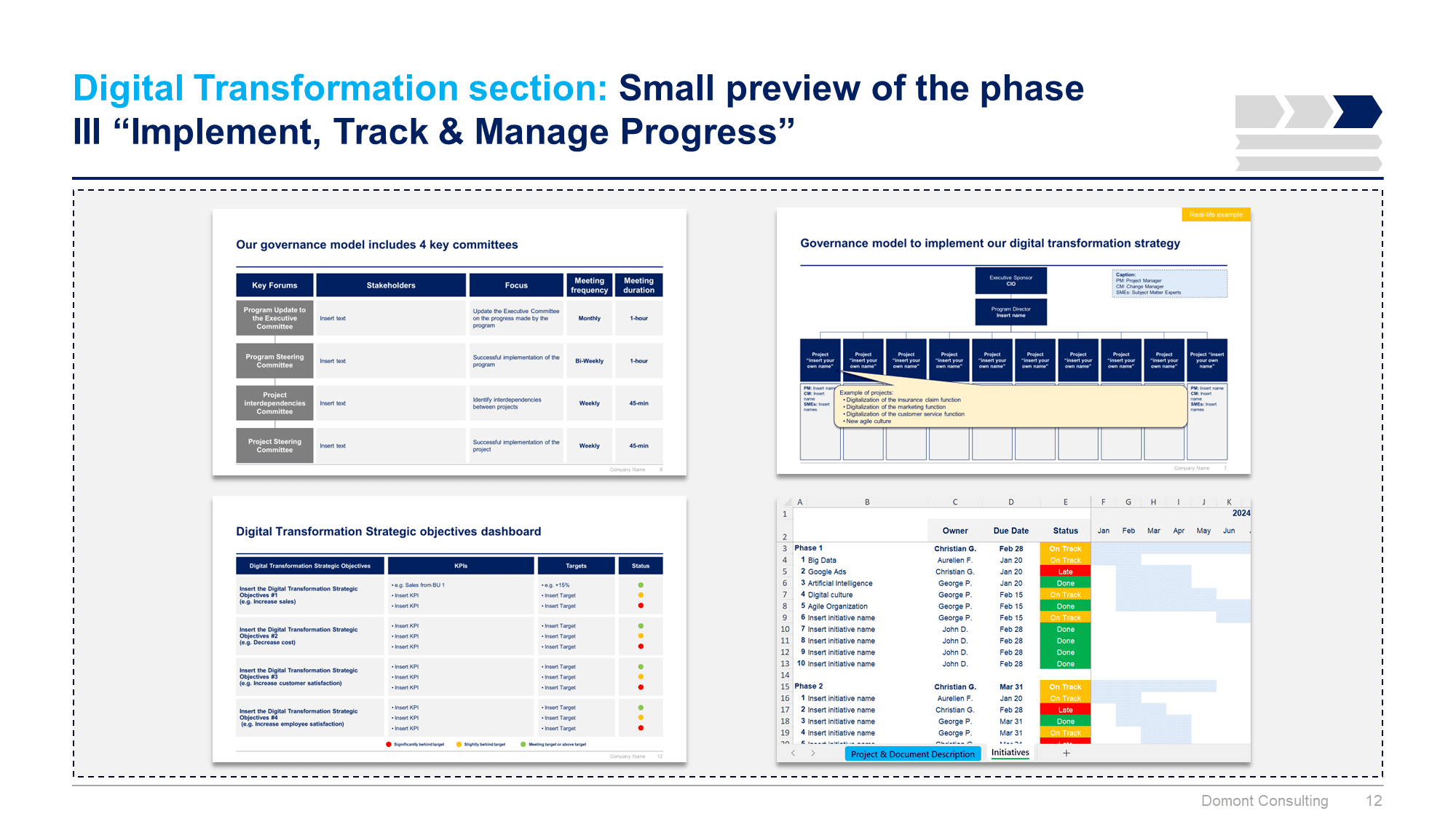
- Prioritize, plan and implement your projects: (1) Project prioritization, (2) Business roadmap, (3) Governance, (4) Dashboards, (5) Project implementation: agile methodology, design thinking and traditional methodology, (6) Continuous improvement (7) Post program/projects evaluation and lessons learnt
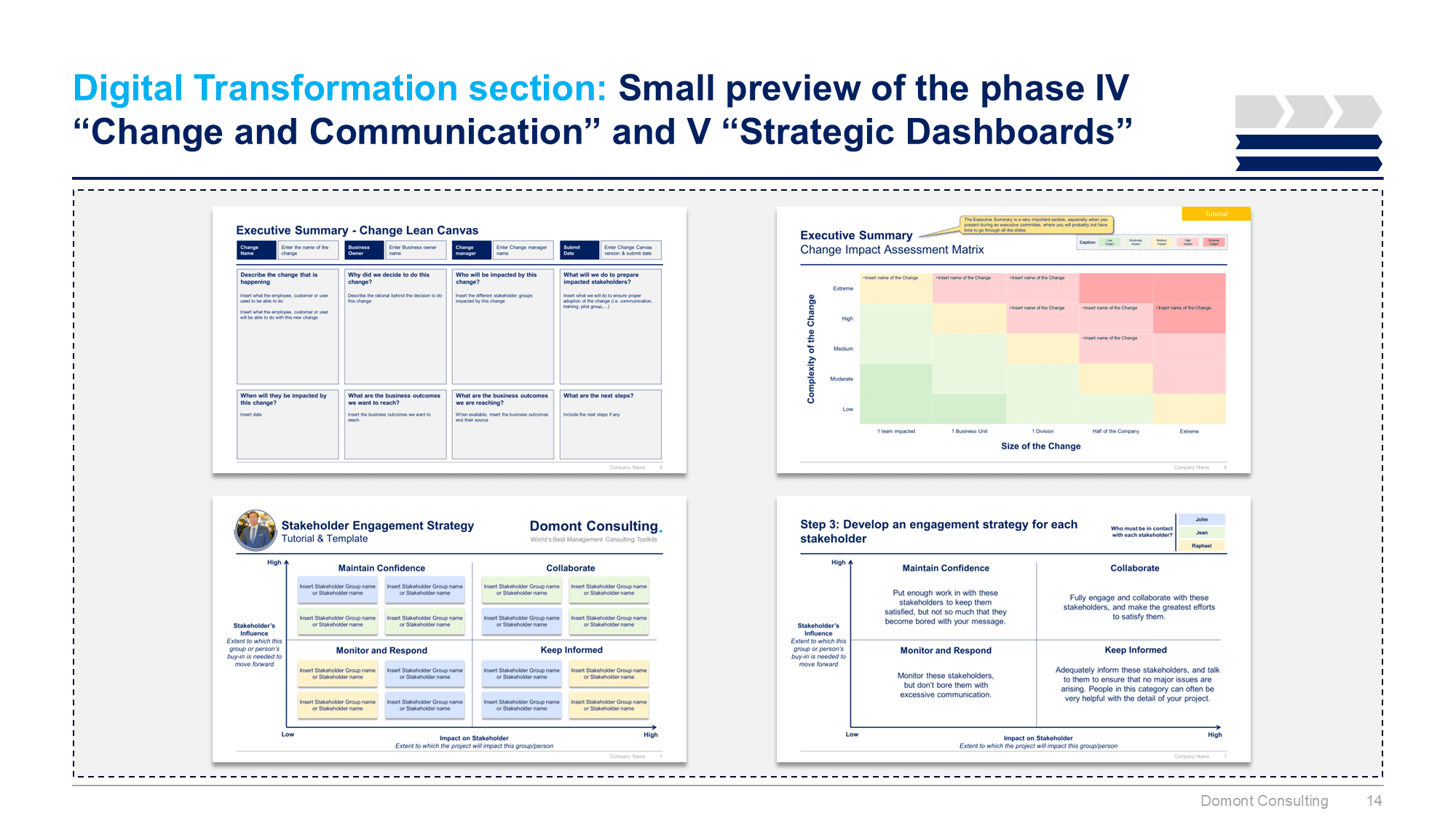
- Define and implement your change management strategy and internal communication strategy: (1) Change management strategy, (2) Change management plans, (3) Implementation, tracking and progress management, (4) Effective communication
Details & Craftsmanship
Every detail has been carefully considered to bring you the perfect product.
Details & Craftsmanship
Every detail has been carefully considered to bring you the perfect product.
Details & Craftsmanship
Every detail has been carefully considered to bring you the perfect product.
Details & Craftsmanship
Every detail has been carefully considered to bring you the perfect product.
Details & Craftsmanship
Every detail has been carefully considered to bring you the perfect product.
Details & Craftsmanship
Every detail has been carefully considered to bring you the perfect product.
Details & Craftsmanship
Every detail has been carefully considered to bring you the perfect product.
Details & Craftsmanship
Every detail has been carefully considered to bring you the perfect product.
Details & Craftsmanship
Every detail has been carefully considered to bring you the perfect product.
Details & Craftsmanship
Every detail has been carefully considered to bring you the perfect product.
Details & Craftsmanship
Every detail has been carefully considered to bring you the perfect product.
Details & Craftsmanship
Every detail has been carefully considered to bring you the perfect product.
Details & Craftsmanship
Every detail has been carefully considered to bring you the perfect product.
Details & Craftsmanship
Every detail has been carefully considered to bring you the perfect product.
Details & Craftsmanship
Every detail has been carefully considered to bring you the perfect product.
Details & Craftsmanship
Every detail has been carefully considered to bring you the perfect product.
Details & Craftsmanship
Every detail has been carefully considered to bring you the perfect product.
Details & Craftsmanship
Every detail has been carefully considered to bring you the perfect product.
Details & Craftsmanship
Every detail has been carefully considered to bring you the perfect product.
Details & Craftsmanship
Every detail has been carefully considered to bring you the perfect product.
Details & Craftsmanship
Every detail has been carefully considered to bring you the perfect product.
Details & Craftsmanship
Every detail has been carefully considered to bring you the perfect product.
Details & Craftsmanship
Every detail has been carefully considered to bring you the perfect product.
Description
This Digital Transformation and IT Strategy Toolkit was created by ex-McKinsey, Deloitte and BCG Management Consultants, after more than 5,000 hours of work. It is considered the world's best & most comprehensive Digital Transformation and IT Strategy Toolkit. It includes all the Frameworks, Best Practices & Templates required to successfully undertake the Digital Transformation of your organization and define a robust IT Strategy.
- Carry out a Business Case for Change: (1) Situation & key challenge, (2) Recommendation to launch a digital transformation, (3) Reasons for launching a digital transformation, such as “an increasingly digitally friendly world”, “a low digital maturity within our organization”, “an opportunity to generate additional revenue”, “an opportunity to decrease our costs”, “a great return on investment”, and “a perfect alignment with the corporate and business strategy”
- Define the Digital Transformation Strategy: (1) Key success factors, (2) Digital transformation program team and budget, (3) Current and target digital maturity level, (4) Digital transformation vision, (5) Digital transformation strategic objectives to reach our vision, (6) Potential projects to reach our strategic objectives, (7) Business cases and financial models to prioritize our potential projects, (8) Project prioritization, (9) Digital transformation roadmap including our prioritized projects, (10) Required technologies to implement the projects
- Create strategic dashboards: (1) Annual, quarterly and monthly overall performance dashboards, (2) Revenue and profit actuals and estimates, (3) Sales and cost breakdown analysis, (4) Three financial statement model, (5) Other common charts
- Define a robust IT Strategy that will enable your business strategy and Digital Transformation: (1) Enterprise Architecture, (2) Summary of the Corporate & Business Strategy, (3) Current & Target IT Capability Maturity Levels, (4) IT Vision, Mission & Values, (5) IT Value Drivers, (6) IT Strategic Objectives & KPIs to reach our Vision, (7) IT Team & Budget, (8) IT Guiding Principles
- Define the key pillars required to implement your IT Strategy: (1) IT Operating model, (2) Technology, (3) Data Management & Infrastructure, (4) IT Services, (5) Sourcing & Procurement Strategy
- List your potential initiatives for each pillar
- Create your business cases and financial models to assess potential initiatives
- Prioritize, plan and implement your projects: (1) Project prioritization, (2) Business roadmap, (3) Governance, (4) Dashboards, (5) Project implementation: agile methodology, design thinking and traditional methodology, (6) Continuous improvement (7) Post program/projects evaluation and lessons learnt
- Define and implement your change management strategy and internal communication strategy: (1) Change management strategy, (2) Change management plans, (3) Implementation, tracking and progress management, (4) Effective communication